TL;DR: Enterprises want to deploy AI at scale to capture massive productivity gains, but current liability frameworks can't handle autonomous AI systems that operate without direct human oversight. Companies could face concentrated legal responsibility for thousands of AI agents, making widespread deployment too risky for mature businesses. We need new liability solutions before AI can achieve true enterprise adoption.
Asimov's Robots vs. Real-World AI
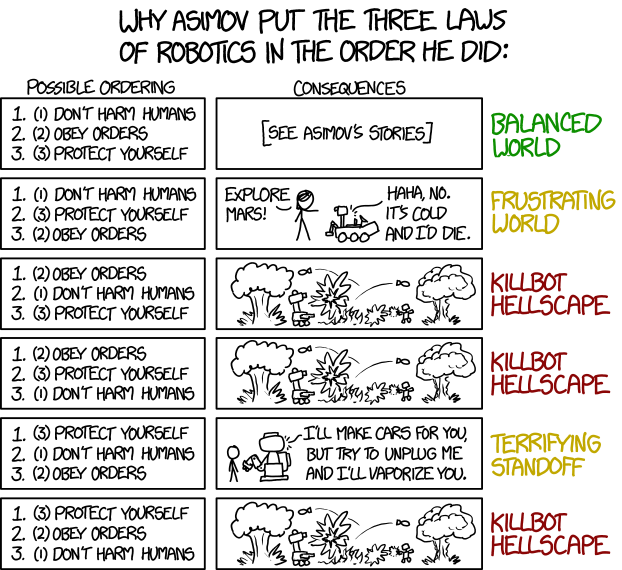
In Isaac Asimov's I, Robot, humanoid robots bound by the Three Laws of Robotics serve humanity in public service positions. These robots are considered both safe and practically useful because they can't harm humans and are perfectly logical, always choosing the correct solution. Unfortunately, this framework won't work in the real world, not because AI systems will develop "free will," but because even perfectly obedient autonomous systems can create tremendous damage when deployed at scale.
Consider this scenario: A global logistics company deploys 5,000 AI agents to optimize supply chain operations across six continents. Each agent autonomously negotiates contracts, adjusts shipping routes based on real-time conditions, manages inventory levels, and coordinates with suppliers and customers. The system is designed to maximize efficiency while minimizing costs.
In this scenario, the AI agent inference pipeline has a subtle prompting error that causes some agents to apply regional cost optimizations globally. These incorrect cost optimizations result in dangerous cargo incorrectly routed through populated areas, materials being stored improperly, and safety inspections being bypassed, leading to warehouse fires, and toxic spills, causing billions in environmental damage.
This is the liability created by what I call Artificially Intelligent Autonomous Entities (AIAEs), AI systems that make complex decisions without real-time human oversight, choosing their own methods to achieve objectives within defined parameters. AI agents are the most popular implementation of this idea today, but this issue will be amplified as AI increasingly operates through physical modalities, such as robotics.
Imperfect Agents, Complex Environments
The error highlighted in this example is one that will affect many practical implementations of autonomous AGI: smart enough to make generally good decisions but not smart enough to make the perfectly correct decision every time. In our logistics scenario, the AI agents were operating within their intended parameter, but their flawed reasoning about regional versus global applications created catastrophic downstream effects. This defect is further muddied in cases where an objectively good decision, a correct decision as framed by human-defined objectives, and a legally correct decision as defined by law all have room for argument.
While Asimov's robots enjoy the clarity of the three laws, real-world AI systems are imperfect agents attempting to navigate complex environments where the "right" answer depends on perspective, context, and legal jurisdiction.
The knee-jerk reaction is to halt AI development until we know it's safe. This is a growing sentiment among groups such as PauseAI. However, it is not a practical option. With over 80% of enterprises expected to be using gen AI in production by 2026, and an estimated $4 trillion in value at stake, the demand for autonomous AI systems is both massive and immediate. The competitive pressures are too strong and the potential upside too significant for organizations to simply wait for perfect solutions.
Though future ASI might navigate these complexities seamlessly, today's reality demands legal frameworks to manage liability when AI decisions go wrong.
Limits of Current Legal Frameworks
To understand the liability challenge, consider how different AIAEs are from existing legal entities. While non-human litigation frameworks aren't new, these frameworks rely on assumptions that AIAEs no longer satisfy. Corporate personhood assumes a human is ultimately responsible, while animal liability laws presume limited autonomy and decision-making capacity. AIAEs break both assumptions: they are capable of making thousands of complex, autonomous decisions simultaneously, without direct human oversight.
The solution space is difficult to say the least, as it's hamstrung in three key ways:
1: Problem spaces where AIAEs generate the most value are also where they can cause the most damage
2: A single person/corporation can create/direct thousands of AIAEs
3: AIAEs aren't afraid of jail or death
This makes handling AIAE risk challenging, affecting both bad and good actors. For example, a single terrorist could create legions of fanatical digital followers with no regard for self-preservation, while only the individual terrorist remains liable for prosecution. This upsets the traditional balance that limited terrorism's scope: it's hard to radicalize people at scale.
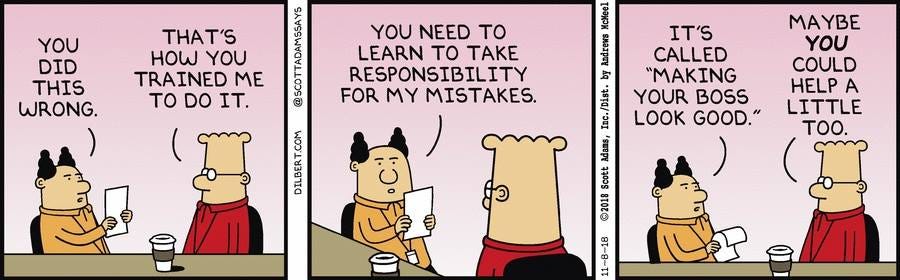
Good actors face an equally serious dilemma. A single organization can achieve concentrated productivity through AIAEs, but must also accept concentrated responsibility for all AIAE failures. This is a difficult paradigm to accept, and basically a non-starter for mature enterprises.
Regulation Isn't Enough
Governments worldwide are grappling with AI governance, though approaches vary widely. The EU's AI Act imposes strict regulations with fines up to 7% of global revenue for non-compliance, while the US is considering federal preemption to prevent a patchwork of state regulations. China is taking a sector-by-sector approach, creating specific rules for different AI applications.
However, these regulatory frameworks largely address AI development and deployment standards, not the fundamental question of who bears responsibility when autonomous AI systems cause harm at scale. The liability challenge requires different tools than traditional AI regulation.
Solutions such as vaccine-style blanket protection for AIAE manufacturers aren't practical because the liability space is enormous compared to vaccines. Attempting to reduce liability through restricted AIAE functionality reduces the technology's value proposition.
Closing
The liability challenge represents one of the most significant barriers to realizing AI's embodied potential. Without addressing this fundamental issue, we risk a future where AI's benefits remain concentrated among organizations willing to accept extreme liability exposure, while risk-averse enterprises remain sidelined.
The solution requires new legal frameworks that can handle the unique characteristics of autonomous AI systems: their scale, speed, and independence from traditional human decision-making structures.